Education Hub

Palliative Care Symposium 2025

Hospis Malaysia Palliative Care Symposium 2025 brought together more than 60 healthcare professionals, policymakers, advocates, and thought leaders from across the region — united in advancing and strengthening palliative care. Our heartfelt thanks to all presenters and participants for making it a success.

This year’s symposium featured international speakers who shared insights on building care networks, co-designing with patients, strengthening community care, and embedding humanitarian values into health systems. Their experiences inspired us to rethink what’s possible for palliative care in Malaysia and the region.

We invite all participants and interested healthcare professionals to explore the session summaries and presentation videos to continue the learning and collaboration.

To request access to the presentation videos, kindly click here.

Summaries of Presentations

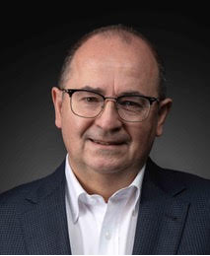
Prof. Carlos Centeno

Director of the Department of Palliative Medicine at Clínica Universidad de Navarra, Spain

Title: Bringing WHO Quality Indicators into Action

Faces and Numbers: Why Both Matter in Palliative Care

Prof. Carlos Centeno, a palliative care physician, says simply, “I feel well with a patient.” So why step away from the bedside to work with data? Because to him, numbers are never abstract – they represent people.

Read more

Dr. Julie Ling

Technical Officer for Palliative Care at the World Health Organization (WHO)

Title: The Importance of Building Effective Networks in Palliative Care

Stronger Together: Building Networks to Advance Palliative Care

As Technical Officer for Palliative Care at WHO, Dr. Julie Ling spends her days building connections, yet her talk “The Importance of Building Effective Networks in Palliative Care” was her first on the subject.

Read more

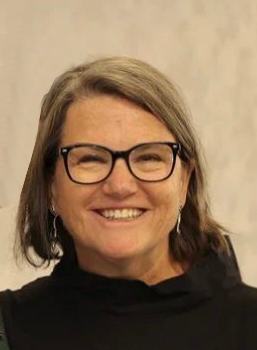
Prof. Nancy Preston

Co-Director of the International Observatory on End-of-Life Care, Lancaster University

Title: Patient Engagement – Co-designing Palliative Care

“Treat Me as a Human Being”: Patients as Partners in Designing Palliative Care

In palliative care, patients and families should be treated not just as recipients but as active partners in shaping care. Professor Nancy Preston of Lancaster University emphasises the value of patient and caregiver involvement in both care and research design. Through projects like the Namaste Project, which supports people with advanced dementia, Preston’s team collaborates closely with patients, families, and carers to ensure care is meaningful and compassionate.

Read more

Prof. Carlos Centeno

Director of the Department of Palliative Medicine at Clínica Universidad de Navarra, Spain

Title: Coping to Flourish: The Transformative Journey of Palliative Care Professionals

Holding Space: Lessons in Strength, Sorrow, and Service

With 30 years of experience in palliative care, Professor Carlos reflects on the emotional journey of working in the field. While burnout is a familiar challenge, he observes that many who remain grow emotionally stronger and more resilient over time. Alongside the deep sorrow of witnessing loss, he speaks of the profound beauty the work has brought into his life. In a heartfelt address to an auditorium of healthcare professionals, he shares moving, relatable stories that capture both the weight and the quiet grace of a life spent in service to others.

Read more

Dr. Sabrina Bajwah

Honorary Consultant in Palliative Care, King’s College Hospital, London

Title: Developing a Community Specialist Palliative Care Model for Interstitial Lung Disease Patients Using the Medical Research Council Framework

Beyond Assumptions: Rethinking Palliative Care Model for Various Illnesses

Dr. Sabrina Bajwah, a Clinical Senior Lecturer and Honorary Consultant in Palliative Care at King’s College Hospital, challenges the assumption that care models for cancer patients can simply be applied to those with Interstitial Lung Disease (ILD). Tasked with developing a palliative care framework for ILD, she instead asked: What if the model doesn’t fit?

Read more

Dr. Emmanuel Luyirika

Executive Director, African Palliative Care Association (APCA)

Title: Implementing and Evaluating Policies and Standards to Improve Community Palliative Care

Following Through on Promises: Securing Funding and Support for Palliative Care

Dr. Emmanuel Luyirika, Executive Director of the African Palliative Care Association, emphasises that policy is not just a statement of intent, but a strategic tool for real and lasting change in palliative care. A well-crafted policy outlines goals, defines how they will be achieved, and sets clear measures for accountability. It also helps uncover existing resources, align local efforts with global standards, and secure vital funding — as shown by the $18 million grant for cancer care in the Democratic Republic of Congo.

Read more

Dr. Rachel Coghlan

Senior Technical Advisor, Nossal Institute for Global Health

Title: Integrating Humanitarian Values into Palliative Health Systems

Palliative Care as an Act of Humanity: Compassion in Crisis

Dr. Rachel Coghlan, Board Director of Palliative Care Australia, shared a moving reflection on the deeply human essence of palliative care. Recounting stories from Gaza to war-torn Somalia and historical humanitarian moments like Solferino, she reminded us that comfort doesn’t always come from medicine, but from presence, connection, and compassion.

Read more

Dr. Diah Martina

Senior Technical Advisor, Nossal Institute for Global Health

Title: Developing Primary Palliative Care Through a Research Process

Evidence in Action: Mission to Advance Primary Palliative Care in Indonesia

Dr. Diah Martina, Senior Technical Advisor, Nossal Institute for Global Health shared her experience leading a national research project for the World Health Organization to assess and improve palliative care in Indonesia. Faced with the vast diversity and logistical challenges of a country of over 270 million people, she stressed the importance of evidence-based, culturally relevant policymaking.

Read more

Prof. Srivieng Pairojkul

Head of Karunruk Palliative Care Center, Srinagarind Hospital, Faculty of Medicine, Khon Kaen University

Title: Developing Palliative Care Network in Thailand

Building with Compassion: A Vision for Palliative Care in Thailand

Professor Srivieng Pairojkul, Head of the Karunruk Palliative Care Center, shared Thailand’s evolving palliative care journey. Despite the country’s impressive 99% universal health coverage, she disclosed a critical gap: insufficient palliative care units, trained professionals, or access to pain relief and emotional support.

Read more

Jeyanthi Annamalai, Caregiver (Wife)

Mahalinggam A/L Karpayah, 76 – Progressive Supranuclear Palsy (PSP) & Chronic Myeloid Leukaemia

“My husband was first diagnosed with Parkinson’s, but when his condition worsened, we were referred to Hospis Malaysia (HM).”

After retiring in January 2023, Jeyanthi enjoyed a holiday in Bali with her husband. Soon after, he contracted brain meningitis and everything changed. He became bedridden, unable to walk or speak, requiring full-time care. By April 2024, they finally received the correct diagnosis: progressive supranuclear palsy (PSP), an irreversible condition.

“I went through denial, anger, and desperation. I spent so much trying to cure him, not realising I needed to focus on comfort instead.”

HM became her pillar of strength. In one pivotal conversation, Dr. Punitha helped Jeyanthi accept the reality of PSP and shift her focus from cure to quality of life. The team — including nurse Bazilah and rehabilitation therapists — taught her how to care for her husband gently and confidently, from safe exercises to communication through simple hand pressure and blinking. They also provided essential equipment to improve his comfort at home.

A year into HM’s care, her husband regained some mobility and could walk short distances with support.

“Palliative care isn’t just for patients — it’s for caregivers too. HM helped me care for my husband with dignity, but they also helped me care for myself.”

Today, Jeyanthi focuses on ensuring her husband’s days are filled with comfort, connection and love. “Without HM, I would have been lost. They gave us strength, knowledge and peace during the hardest time of our lives.”

Nigel & Veronica Spykerman, Caregivers (Parents)

Gilbert, 3 – Atypical Teratoid/Rhabdoid Tumour (ATRT)

Gilbert was diagnosed with Atypical Teratoid/Rhabdoid Tumour (ATRT), a rare and aggressive brain cancer, in April 2024 at nine months old. Having previously experienced Hospis Malaysia’s (HM) support during a family member’s end-of-life journey, his parents knew they needed the right guidance for the road ahead.

Gilbert underwent multiple surgeries, including the insertion of a ventriculoperitoneal (VP) shunt. While his hospital treatment was intensive, HM became the crucial link between hospital care and home recovery.

“HM became our gap filler,” the family said. “When hospital appointments were hard to secure, they were there to guide us.”

HM worked alongside hospital specialists and an external physiotherapist to support Gilbert’s rehabilitation. Their physiotherapist guided the family through structured daily exercises and recorded them to ensure therapy could continue consistently at home. Led by Dr. Wai Fong, the HM team also provided caregiver training, timely medical advice and recommendations for home modifications.

Today, Gilbert is cancer-free. The focus has shifted to rebuilding his strength and supporting his developmental milestones — learning to crawl, stand and walk independently.

“Looking back, there have been so many special moments with HM — seeing Gilbert kneel again, stand for a few extra seconds, and regain his strength. HM’s care goes far beyond medical support — they empower families, boost confidence, and make every milestone possible. Early palliative care can transform a recovery journey and for us, HM made all the difference.”

Gilbert’s story is a reminder that palliative care is not only about end-of-life — it can also be a vital source of support in recovery, rehabilitation and helping families move forward with confidence and hope.

Liew Yen, 83

Lung cancer

Liew Yen was diagnosed with lung cancer at the age of 82 and was referred to Hospis Malaysia (HM) by her doctors.

“At first, I felt nervous. But over time, it felt like friends coming to visit.”

Through regular visits, the HM team — including Su Jiun and Sang Sang — guided her with gentle, personalised physiotherapy. They taught her how to sit properly, stand safely, transfer to her wheelchair, and walk with a frame.

“With their exercises and encouragement, I slowly regained my independence. I can now go to the washroom and join family gatherings again.”

HM tailored every session to her abilities, never pushing beyond her limits. Beyond physical care, they also trained her husband and children on how to care for her safely at home, giving the whole family confidence and reassurance.

“Their care is professional, compassionate, and truly dedicated. We are deeply grateful.”

For Liew Yen, HM’s support has restored not only mobility, but also dignity, comfort and peace of mind for her family.

Michael Tan, 65

Heart failure

Michael was diagnosed in June 2021, shortly after undergoing bypass surgery. Just three weeks after being discharged, he suffered two heart attacks during the height of the pandemic.

“When I reached the hospital, I told my son, ‘I don’t think I’m going to make it.’”
His son replied, “I’m going to give you strength — your daughter-in-law is pregnant.”
That hope carried him through. His grandson was born the following year.

After discharge, Michael was referred to Hospis Malaysia (HM). “When I first heard ‘hospice,’ I thought it meant the end,” he admits. “But they gave me a different perspective. They helped me live.”

HM supported him beyond symptom control — reviewing his medications, adjusting pain management, and guiding him through the safe use of morphine. “When pain is controlled, frustration goes away. Sometimes it’s not anger — it’s the pain talking.”

The team also became a bridge between Michael and his family. “When I can’t explain things to my wife or children, HM helps them understand. They listen. They respond. I feel heard.”

Once an active man who loved gardening and working, Michael now has to pace himself carefully. With HM’s guidance, he has learned to manage his limits while maintaining dignity and independence.

“After hospital discharge, those first few months are critical. Without proper follow-up, patients can deteriorate quickly. With HM, I never felt abandoned. Their presence itself is therapeutic.”

Today, Michael finds strength in family, especially his young grandson. “They didn’t just manage my illness,” he says. “They gave me hope.”

Norlina Binti Non, 51

Kanser Ovari Tahap 4

Norlina pertama kali didiagnosis dengan kanser ovari tahap 2C pada tahun 2009 ketika berusia 35 tahun. Sejak itu, beliau telah melalui beberapa pembedahan besar termasuk histerektomi pada tahun 2019.

Semasa dirawat di hospital, seorang pesakit lain memperkenalkan beliau kepada Hospis Malaysia (HM). Tidak lama selepas discaj, jururawat HM mula datang melawat ke rumah — dan sehingga kini masih setia bersamanya.

“Pada awalnya saya tak faham apa itu penjagaan paliatif. Tapi bila jururawat HM terangkan satu persatu, saya rasa sangat lega dan lebih tenang.”

Ketika pulang ke rumah, Norlina masih lemah dan bergantung kepada peralatan perubatan. Beliau juga takut untuk mengambil morfin. Namun dengan penerangan yang jelas dan jujur daripada jururawat HM, beliau akhirnya berani mencuba.

“Saya takut morfin. Tapi bila difahamkan tentang kebaikan dan risikonya, saya yakin untuk teruskan rawatan.”

Selain sokongan perubatan, HM turut menjadi kekuatan emosi buat Norlina, terutamanya ketika menjalani kemoterapi pada tahun 2023 yang menyebabkan beliau hilang rambut, hilang selera makan dan berasa sangat tertekan.

Dahulu aktif dalam sukan dan aktiviti luar, kini Norlina menggunakan kerusi roda akibat masalah tulang belakang. Walaupun pergerakannya terhad, beliau belajar untuk menerima bantuan dan menyesuaikan diri dengan keadaan baharu.

“Ramai terkejut bila tahu jururawat datang ke rumah secara percuma. Mereka tak tahu penjagaan paliatif komuniti wujud dan sangat membantu pesakit yang sudah tak larat ke hospital.”

Sejak menerima sokongan berterusan daripada HM, Norlina tidak lagi perlu ke unit kecemasan hampir dua tahun.

“Saya sangat bersyukur dengan kehadiran Hospis Malaysia dalam hidup saya. Mereka beri saya ketenangan, rasa selamat dan kekuatan untuk teruskan hidup.”

Madam Soo Siew Poh, 68

Colorectal Cancer

Madam Soo was diagnosed with colorectal cancer in 2019, just before the COVID-19 pandemic. After surgery and months of adjusting to life with a stoma bag, she chose not to pursue chemotherapy despite a guarded prognosis. When the cancer relapsed in 2023 and spread to her lung, she went through multiple rounds of treatment, but the side effects were overwhelming.

That was when her daughter reached out to Hospis Malaysia (HM).

“At first, the word ‘hospice’ frightened me,” Madam Soo shares. “It felt like the end.” But meeting Nurse Mastura and Dr. Hashima changed everything. “They weren’t there to give up on me. They were there to help me live well.”

Through home visits, symptom management, emotional support and honest conversations, the team helped Madam Soo and her daughter prepare for what lay ahead — with clarity, comfort and dignity. From managing pain with morphine to being just one phone call away during emergencies, Hospis Malaysia became their pillar of strength.

Today, Madam Soo finds joy in simple things — ice cream, time with her grandchildren, conversations without fear. A proud Baba Nyonya who loves sewing and cooking, she treasures the photobook created with her family and the closeness they’ve gained through this journey.

“With HM, we found quality of life in this limited time,” she says. “More humane, more personal, more peaceful.”

Her advice: Don’t wait. Love deeply. Do what matters.